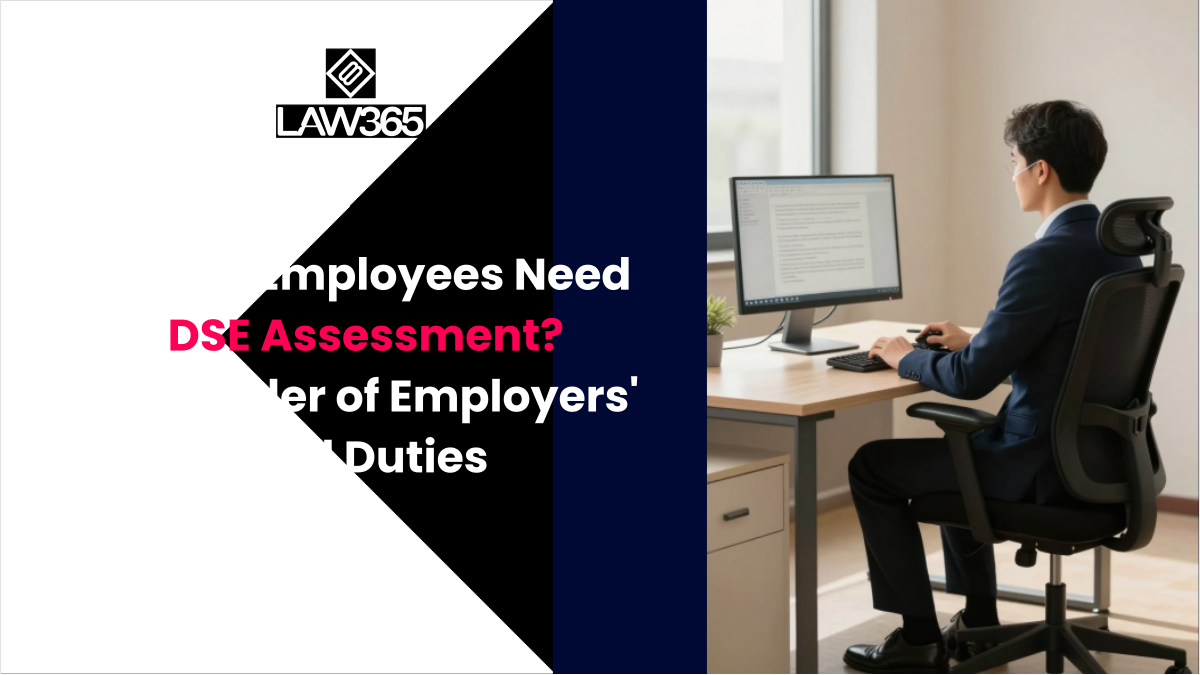
As hybrid and office-based working continue to be the norm for many businesses, employers should ensure they are meeting their legal obligations in relation to display screen equipment (DSE). While DSE assessments are often viewed as an administrative task, they form an important part of an employer's duty to protect the health and safety of its workforce.
Who does the duty apply to?
Crucially, these legal obligations apply to all employers, regardless of the size of the business. Whether you are a large corporation or a small business with just one employee, the duty remains the same. There is no minimum employee threshold for this requirement; if you employ someone who habitually uses display screen equipment, you have a legal duty to protect them.
Under the Health and Safety (Display Screen Equipment) Regulations 1992, employers must assess workstations used by "DSE users", employees who habitually use display screen equipment as a significant part of their normal work. This includes employees working from home as well as those based in the office.
When is an employee a "DSE user"?
In practice, an employee is likely to be a DSE user if they use a computer, laptop, or similar device for continuous or near-continuous periods of around an hour or more at a time on most working days. When carrying out the assessment, this should consider the workstation as a whole, including the screen, keyboard, chair, desk, lighting, space, and working environment, together with how the employee uses the equipment.
What must employers do?
Where risks are identified, employers must take appropriate steps to reduce them. This may include:
-
Providing suitable equipment and adjusting the workstation to fit the user.
-
Offering additional accessories such as footrests, laptop stands, or document holders.
-
Providing information and training on how to set up their workstation correctly.
-
Ensuring work is planned so there are regular breaks or changes of activity to reduce the risk of fatigue and musculoskeletal issues.
Furthermore, the Regulations require employers to offer eye and eyesight tests to DSE users on request and, where special corrective appliances are needed specifically for DSE work, contribute towards the cost.
Ongoing obligations
A DSE assessment is not a one-off exercise. Assessments should be reviewed whenever there is a significant change, such as a new workstation, a move to homeworking, the introduction of new equipment, or where an employee reports discomfort or health concerns.
Ensuring compliance with DSE obligations is a direct and cost-effective way of reducing the risk of work-related injury and supporting employee wellbeing. If you are unsure whether your organisation's DSE procedures are up to date, seeking legal advice can help ensure your business remains compliant while supporting a safe and productive working environment.
If you require support or guidance in conducting a DSE assessment or health and safety policies, contact our expert legal team here.