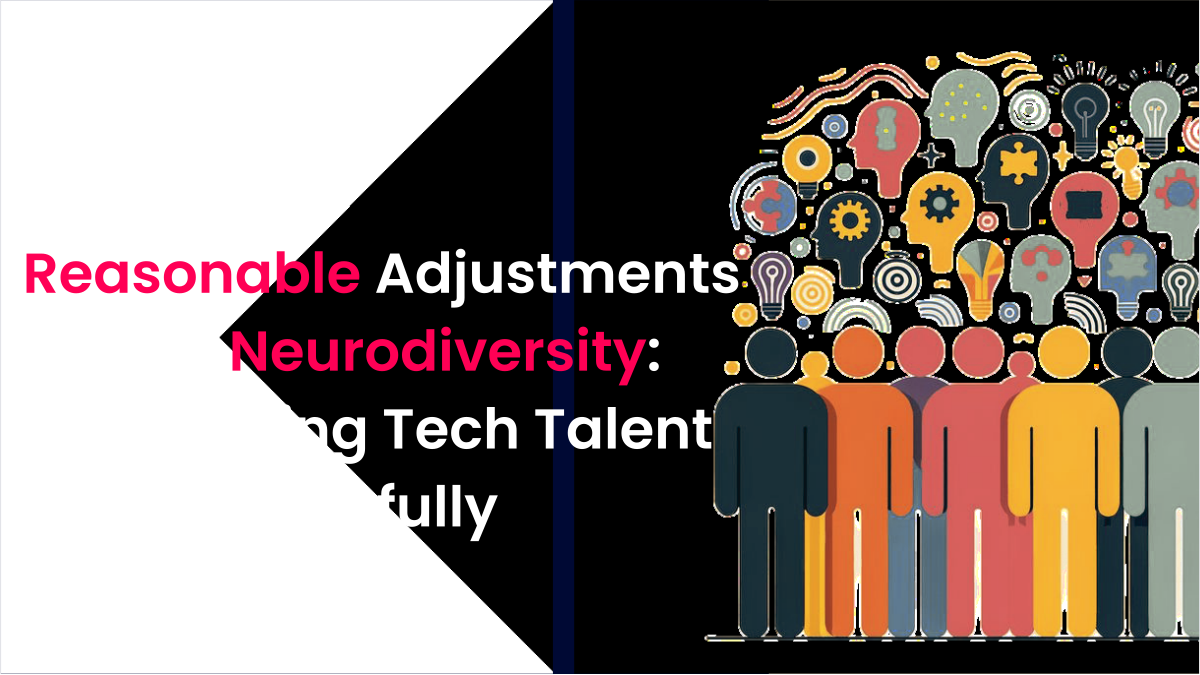
One of the most significant, and least discussed, legal obligations for UK tech employers is the proactive duty to make reasonable adjustments for neurodivergent employees. This duty affects any employer where a worker has a disability within the meaning of the Equality Act 2010, and it applies from the moment the employer knows, or ought reasonably to know, that an employee is struggling. This article explains how the duty works in practice, what the process requires of employers, and what the consequences are for businesses that fail to engage.
What This Means for Tech Employers
The UK technology sector thrives on innovation, problem-solving, and analytical thinking, traits often found in abundance among neurodivergent individuals. Whether an employee has ADHD, autism, dyslexia, or dyspraxia, their unique cognitive approach can be a significant asset. However, to unlock this potential and remain compliant with the Equality Act 2010, tech employers must understand their legal obligations regarding reasonable adjustments.
1. The Legal Framework
Under the Equality Act 2010, an employer has a legal duty to make reasonable adjustments where there is knowledge that an individual has a disability and that individual is at a substantial disadvantage compared to non-disabled persons due to a 'provision, criterion or practice' (PCP) or a physical feature of the premises.
The duty is proactive. Once an employer knows, or ought reasonably to know, that an employee is neurodivergent and struggling, the obligation to explore adjustments is triggered.
- Many neurodivergent conditions meet the legal definition of a disability if they have a 'substantial and long-term adverse effect' on the individual's ability to carry out normal day-to-day activities.
- The employer does not need to wait for a formal diagnosis before the duty arises; constructive knowledge is sufficient.
- A failure to make reasonable adjustments when the duty is triggered constitutes unlawful discrimination under the Equality Act 2010.
2. Practical Examples of Adjustments in Tech
Adjustments do not always require significant financial investment. In a tech environment, adjustments often focus on communication styles and environmental control.
A small adjustment can have a significant impact on an employee's working life.
- Environmental Control: Providing noise-cancelling headphones, allowing use of 'focus booths,' or adjusting office lighting to support those with sensory processing sensitivities.
- Flexible Working: Allowing varied start and finish times to avoid the sensory overload of peak-time commuting, or supporting remote work to provide a controlled environment for deep-work tasks such as coding.
- Communication Shifts: Moving away from 'impromptu' desk-side conversations in favour of scheduled meetings with clear agendas, or providing written instructions following verbal briefings.
- Software and Hardware: Providing assistive technology such as speech-to-text software, dual monitors for organisation, or specialised project management tools.
3. The Process: A Collaborative Approach
The most effective adjustments are those developed in collaboration with the employee. A standard process should include the following steps.
Avoid making assumptions based on a diagnosis; neurodivergence affects everyone differently.
- Initial Discussion: A private, supportive meeting to understand the specific barriers the employee is facing.
- Expert Input: Where the 'reasonable' nature of an adjustment is unclear, consider an Occupational Health assessment or a specialised workplace needs assessment from organisations such as Access to Work.
- Implementation and Trial: Agree on the adjustments and implement them for a trial period. Adjustments that work on paper may require refinement in practice.
- Regular Review: Tech roles evolve rapidly. Adjustments should be reviewed at least every six months to ensure they remain effective as the employee's responsibilities change.
Documentation and Compliance
From a risk management perspective, documentation is vital. Employers should maintain a 'Reasonable Adjustments Passport' or a similar formal record.
- The identified barriers and the agreed-upon adjustments.
- The rationale for why certain adjustments were chosen and, if applicable, why others were deemed 'unreasonable.'
- A schedule for future reviews.
Consistent documentation ensures that adjustments follow the employee if they change teams within the business and provides a robust audit trail should the business ever need to defend its actions in an Employment Tribunal.
Why This Matters in Practice
- Constructive Knowledge Risk: An employer can be found liable even where an employee has not formally disclosed a neurodivergent condition, if the employer ought reasonably to have known.
- Failure to Adjust Risk: Failing to make reasonable adjustments when the duty is triggered constitutes a standalone form of unlawful discrimination under the Equality Act 2010.
- Lack of Documentation Risk: Without a formal record of adjustments considered, agreed, and reviewed, an employer has no audit trail with which to defend an Employment Tribunal claim.
- Outdated Adjustments Risk: Failing to review adjustments as a tech role evolves can render previously adequate measures insufficient, re-triggering the duty.
Why Work with a Specialist Employment Lawyer
A specialist employment lawyer can help tech employers meet their obligations lawfully and proactively:
- Advise on when the duty to make reasonable adjustments is triggered, including in cases of constructive knowledge.
- Review existing adjustment processes to identify gaps in compliance.
- Draft or review Reasonable Adjustments Passports and associated policies.
- Advise on what constitutes a 'reasonable' adjustment, including where cost or operational impact is a factor.
Meeting Your Reasonable Adjustments Obligations in 2026
Businesses should be aware of the proactive nature of the reasonable adjustments duty and begin reviewing their practices now. Ensuring you are ready to identify, implement, and document adjustments for neurodivergent employees is not optional; it is a legal obligation that applies from the moment the duty is triggered.